00970202 — Technion — Faculty of Data and Decision Sciences — Winter 2026–27
Modern Computer Vision
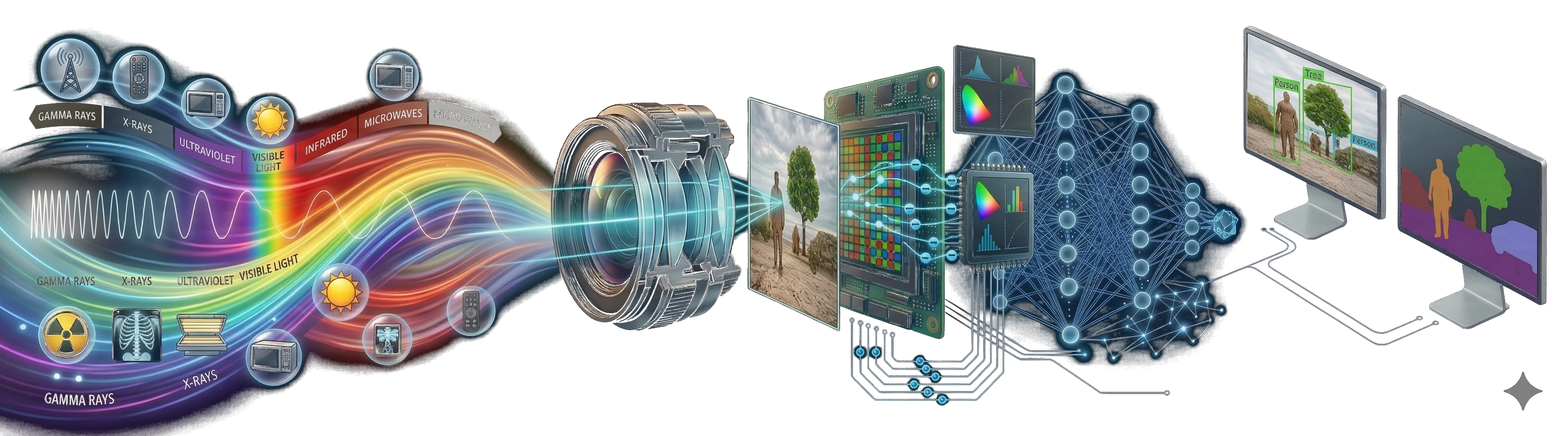
Computer vision today is driven by deep networks, but the way we design, train, and reason about them is deeply rooted in classical vision and signal processing. To truly do research and build creative new methods, you need both: learning and understanding pixels. MCV is roughly 70% deep learning for vision and 30% the classical foundations that enable it.
We go from the very basic math all the way to state-of-the-art practice. The goal is to get to the bottom of things, develop real intuition, and encourage creative new thinking. Five homework sets each have three tracks: theory, from-scratch implementation, and applied. The course has a research orientation and concludes with a final research project.
Tutorials: the Spring 2026 sequence is retained, beginning with PyTorch + Point Ops on November 1, with a new Vision-Language Models (VLMs) tutorial on January 17.
Final project: submit a five-minute video. Recorded talks are welcome; AI-assisted explanatory videos are encouraged. Project instructions →
Schedule: the previous lecture sequence is retained, with January 24 reserved for an additional session whose topic will be announced. View the planned schedule →
Sundays, November 1, 2026 – January 24, 2027. Lecture 13:30–16:30, tutorial 16:30–17:30.
Times carried over from Spring 2026; confirmation pending.
Room to be confirmed.
3.5 credits. 5 homework sets (theory + from-scratch + applied) and a final research project.
00940412 & 01040166 & 00960411


Teaching Assistant

Teaching Assistant

Teaching Assistant